
For high schoolers ready to build their own plan
Designing High School gives teens a multi-year college admissions strategy and high school plan that is both inspiring and grounded — built on genuine career exploration, real financial literacy, and a clear vision of where they're headed.
Along the way, they develop the execution skills, tech toolkit, and self-driven mindset that elevate high school performance, and compound long after the program ends.
Designing High School alumni receive priority access to True North Essay Coaching — our 1:1 college application program. Learn more →
They're looking for teens who know what they're building -- and can show it.
Acceptance rates are at historic lows. AI is reshaping the job market faster than most families realize -- including what a CS degree actually guarantees. And the most competitive applicants aren't the ones with the highest numbers. They're the ones with the clearest direction and the most authentic story to tell.
Stanford University admission rate -- the lowest in the university's history
Down from 6.6% in 2012Stanford Common Data Set 2024-2025
UC Berkeley admission rate -- down from 17% just five years ago
124,000+ applicants in 2024UC Berkeley Admissions Data 2024
Jobs globally exposed to AI automation -- including entry-level roles in law, finance, and tech
The job market your teen is enteringGoldman Sachs Global Economics Report, 2023
They're giving their teens the strategic layer that changes everything.
Strategic clarity. Genuine career direction. A college admissions plan built around who your teen actually is. That's what Designing High School builds.
The teens who stand out in today's admissions process aren't just the ones with the highest grades. They're the ones who can articulate what they're building, why it matters, and what they've done about it. That combination -- strategic direction, genuine self-awareness, and the ability to speak authentically about who they are and what they're building -- is exactly what Designing High School develops.
When life design drives college prep
Teens generate a smart, holistic college admissions strategy
connecting who they are to where where they're headed in high school and beyond
Life design and college admissions planning, brought together -- holistic, financially strategic, and grounded in your teen's own direction.
Life design, execution skills, and college admissions strategy -- one smart, holistic plan your teen will actually run.
Rise to Your Potential
1. Your High School Operating System: the skills, tools, and habits that elevate high school performance — and build a compelling admissions profile
Teens build a powerful integrated toolkit anchored by the Student OS — a system designed to help them run their weeks, set semester goals, track progress across multiple dimensions, and backwards plan with precision. An AI prompting pack accelerates learning, research, and prototyping. Live sessions and a curated learning portal deliver design thinking, soft skills, and an 8-week teen mindfulness curriculum grounded in the research on what drives teen peak performance.
The result: teens who know what a compelling admissions profile looks like, how to build a network of supporters, and how to pursue the internships and capstone projects that differentiate them for top colleges.
Build Your College & Career Lens
2. Your Map: a Pathway Hypothesis and Vision — grounded in who you are, career & major research, and where real opportunity lies
Using real assessments and market data, teens map their talents and sources of flow to career pathways with genuine promise. They learn to evaluate major ROI, compare career options across every dimension that matters, and use real BLS data and AI to power their discovery — building the kind of financial and strategic literacy that sharpens every decision ahead.
The result: a holistic career dashboard that scores and ranks their top pathways, so their college and major direction is rooted in both self-knowledge and real-world opportunity.
Develop Your Competitive Edge
3. Your Headstart: a proactive college admissions strategy, authentic narrative, and multi-year plan — built by your teen, ready to run
Teens use their career exploration and personal assessments to identify target schools, evaluate potential majors, and assess financial fit across the full range of college pathways — including scholarship resources, in-state options, and alternative routes with strong ROI. They build an authentic admissions narrative aligned with a planned course sequence, activity arc, and — if they choose — prototype capstone projects.
The result: a powerful multi-year strategic plan they own and can run independently all the way through applications — one that sharpens every conversation with family, mentors, recommenders, and counselors along the way.
Your coach earned admission to the institutions your teen is aiming for — and knows what it takes from the inside.
He knows what selective institutions are looking for -- from the inside.
Ready to see if Designing High School is the right fit? Let's talk.
Book a Free 20-Min CallDeveloped with Bay Area teens in live workshops. Delivered to yours online, every Saturday.
What families are saying
I especially valued the clear, practical strategies for college admissions and the way you made the activities and digital tools engaging.

I now feel very prepared in my college admissions, even as a 9th grader. I feel like I already know what points to hit and what to include, even though I still have another 3 years ahead of me in high school.

This isn't about doing more. It's about stepping back, seeing the full picture, and building a plan and toolkit -- that make every piece of it count.
How it fits
Where Designing High School fits
in your college prep picture
Designing High School is built to complement your teen's existing academic investments -- not replace them. Here's how it fits.
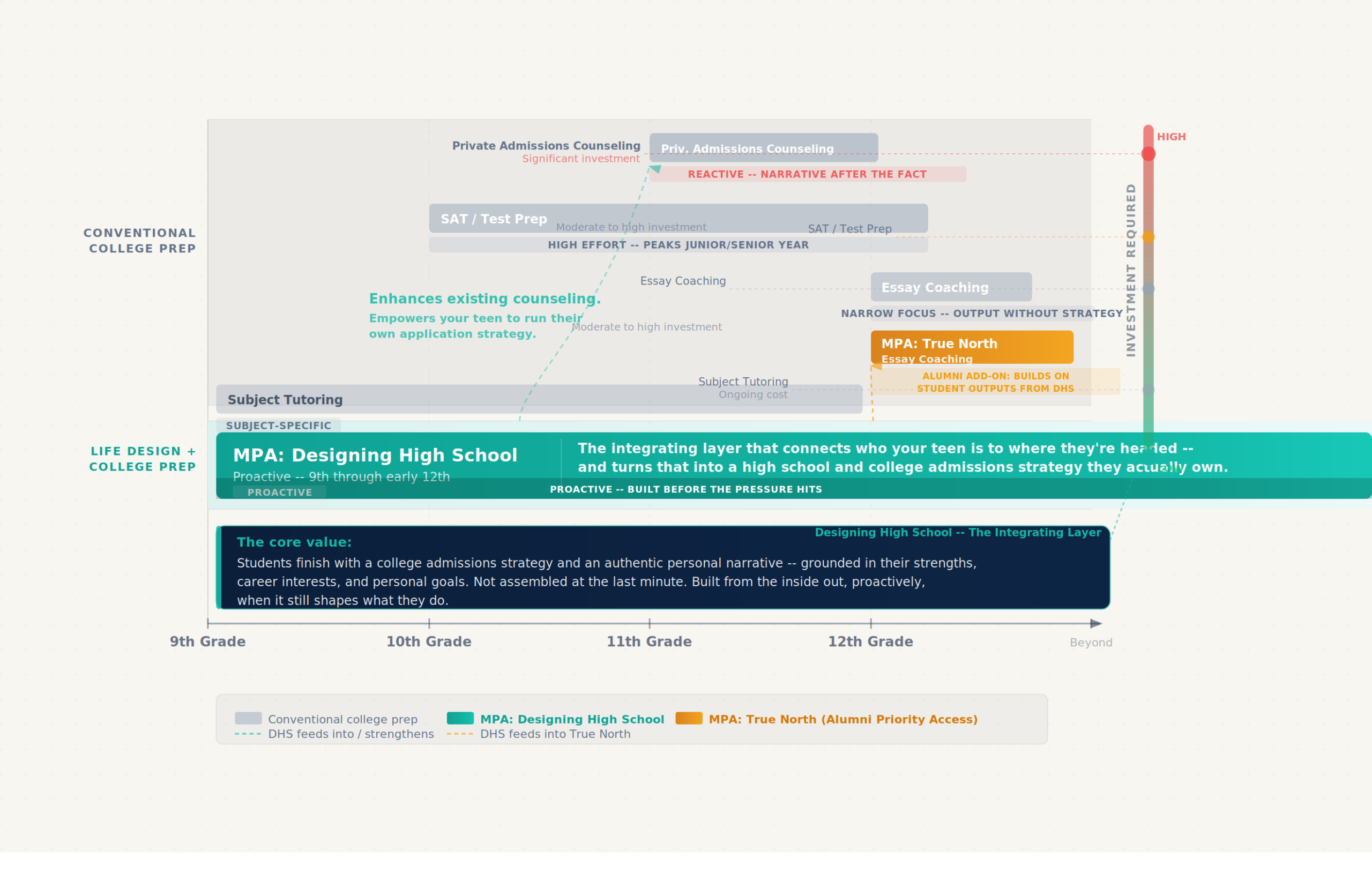
Investment axis shows approximate, relative costs of various college prep activities.
A strategic plan.
Tools that make it all click.
High school goes fast. The teens who get the most out of it aren't just working hard -- they're building something, brick by brick, planning, experimenting, and adjusting as they go.
We make it engaging --
and turn it into a system your teen will actually run.
From CDC data on teen happiness to the Harvard Study of Adult Development to what the experts have found on helping teens to become self-driven -- the program is grounded in what the science actually says about how teens can build a life of authentic accomplishments (and enjoy it).
Schools do amazing work. And still -- teens who want to make the most out of high school need a space that's fully theirs. Somewhere to zoom out and figure out what they're actually building. To learn how to show up with confidence in the rooms -- and relationships -- that matter most.
And to develop the planning systems and execution habits that high-performing teens actually run on. Including a Student OS and a 4-Year Academic and Activity Plan they'll use long after the program ends.
The Harvard Study of Adult Development -- the longest running study of human happiness ever conducted -- points to exactly that. It's the research this program is built on.
A real plan for your four years. A clear vision for what you want to build. The tech tools and habits to make things happen.
The skills that change how you show up -- in every room, every application, and every opportunity that matters.
- Financial literacy -- e.g. financial modeling with simple and compound interest, BLS career data research, budget development, and spreadsheet model creation
- College and career readiness -- e.g. personal narrative and resume development, in-depth reflection on multiple prototyped career paths, and practical application of soft skills for interviews and presentations
- Technology standards -- e.g. leveraging EdTech platforms to demonstrate mastery of financial literacy standards, developing engaging presentations, editing audio recordings, and collaboration and document design in Google Suite and MS Office
Students reached annually across 15 Bay Area high schools -- through the life design curriculum that became this program.
San Francisco USD · Life Design CurriculumFormer students have gone on to a variety of excellent schools such as UC Berkeley, Santa Clara University, UCLA, and UC Davis -- majoring in subjects that include computer science, economics, bioengineering, and public health.
Careers include pharmaceutical research, law, leading research programs at medical schools, and marketing.
Students did not do admissions coaching. Instead, they designed their path.This is the methodology behind Designing High School -- tested, measured, and refined across real Bay Area classrooms before it became a program. Teenagers who know what they're building write better essays, pursue more intentional opportunities, and show up differently in every room that matters. Not a theory. A proven system.
From strengths and self-knowledge to career direction, admissions strategy, and a multi-year plan -- each step building on the last.
Your map, your cohort, your starting point
Meet your cohort, see the map, and start the journey. You'll get a first look at the Student OS, understand the arc of what's ahead, and get your first introduction to the MPA Design Method -- the prototype-and-test approach that runs through every step of the program, starting with the most important design principle of all: begin from your real starting point. You'll also get your first introduction to the growth mindset principle that runs through everything we do here: your current abilities, interests, and direction are starting points -- not fixed limits. Complete your first assignments -- your life satisfaction radar chart baseline and personality profile -- before Step 1 begins.
The foundation for career clarity and a genuinely compelling admissions profile
Values, strengths, and flow -- the conditions that bring you alive and power lasting happiness in your career. Ikigai framework, life area mapping, and your first real data visualization: the radar chart baseline built in Google Sheets. This is your first design artifact -- a real data snapshot of where you are today that you'll return to at the end of the program to measure how far you've actually traveled. You'll also begin using the Student OS to plan your time and work more efficiently -- freeing up energy for what matters most. An 8-week teen mindfulness curriculum begins here, woven into every session that follows.
This step also reframes what a compelling college admissions profile really is -- and why the conventional picture is often wrong. Teens learn what selective colleges are actually looking for, what genuine fit means, and why authentic self-knowledge isn't the soft alternative to a strong profile. It's the strategy for building one.
Soft skills and execution habits that open real doors
Stress literacy, emotional intelligence, and the social skills behind every strong connection. First impressions, active listening, and building the relationships that matter. You'll use mind-mapping to explore your interests and emerging directions -- and learn how to have exploratory conversations with people doing work that genuinely interests you, turning curiosity into real insight about potential paths. You'll go deeper with the Student OS -- building your Weekly Execution Loop, setting goals and anti-goals, and tracking the daily habits that drive peak performance.
The research is clear: the quality of your relationships and your capacity for genuine contribution are among the strongest predictors of long-term success and happiness. These are also the foundations of a differentiated admissions profile -- behind compelling recommendations, meaningful service, and the confidence that unlocks internships and capstone projects that set you apart.
Execution architecture, design thinking, and the strategic frameworks that shape your high school arc
The Student OS goes deeper -- semester goal-setting, backwards planning, AI tools, and EdTech that accelerates learning and frees up time for what matters. You'll apply the MPA Design Method to a real decision: using the prototype-and-test approach to evaluate extracurricular directions for depth, genuine interest, and coherent direction -- rather than volume or resume anxiety.
This step also introduces two strategic frameworks that will shape your entire high school arc: how to think about course selection and academic rigor, and what your choices signal to colleges. You'll begin engaging with your multi-year academics and activity plan -- a living document that connects who you are to what you're building, and that will deepen significantly as your career and major direction comes into focus in the steps ahead.
The financial and strategic literacy that helps you choose the right doors to open
Five types of wealth, opportunity cost, and the math behind real choices. You'll apply a powerful analytical lens to every major decision -- academic, extracurricular, and financial: what am I gaining, and what am I giving up, across every dimension that matters? You'll compare career incomes and lifestyles, build a customized post-college budget in Google Sheets -- including how loan repayment affects real monthly take-home -- and develop a framework for evaluating majors and the high school pathways that unlock them. You'll also get your first introduction to a weighted scoring model: a tool you'll use throughout the program to compare options with clarity rather than anxiety.
Most programs help you open doors. These skills help you choose which doors are worth opening -- identifying careers that give you more of what you actually want, and targeting the majors and colleges that can get you there.
Real data, real careers -- turning research into a scoring model that guides your strategy
Armed with the weighted scoring model from Step 4, you'll now run it on real data. Build a career data dashboard powered by Bureau of Labor Statistics data -- salary ranges, growth trajectories, education requirements, and work environment comparisons across your top career candidates. Run education vs. earnings analysis to understand what different degree paths actually return over time. You'll use AI to accelerate your research and deepen each career entry in your dashboard -- capturing not just the numbers but the qualitative picture of what each pathway actually looks like and how it connects to your strengths, values, and sources of flow.
By the end of this step you'll have the clearest, most data-grounded picture of your career direction of anyone in your grade -- and a research foundation that will directly power your college selection, admissions narrative, and multi-year plan in the steps ahead.
From career clarity to college strategy -- your holistic plan takes shape
With your career dashboard complete, Step 6 is where everything comes together. You'll revisit your RIASEC profile and Ikigai framework with fresh eyes -- now informed by real data -- and begin translating your direction into a holistic college and career strategy. You'll research target schools, evaluate financial fit across the full range of college pathways, and understand how net cost, financial aid, and scholarships change the real picture significantly.
You'll apply the MPA Design Method at full scale -- building three strategic pathway prototypes: alternative visions of your high school arc, each built around a different career and college direction, so your final plan is chosen, not defaulted into. You'll begin developing your authentic admissions narrative: the through-line that connects your strengths, career direction, and personal goals into a story that is genuinely yours. And you'll update your multi-year academics and activity plan -- now with your college and career direction informing your course sequence, activity arc, and timeline.
Synthesize everything into a strategy deck and admissions narrative that are ready to run
Your three pathway prototypes converge into your top hypothesis on your direction -- the most informed, data-grounded version of where you're headed that you've ever had. You'll finalize your authentic admissions narrative -- translating where you've been and where you're headed into compelling language you'll refine all the way through college essays. Your multi-year academics and activity plan gets its most complete update yet, integrating your career direction, course sequence, activity arc, and college targets into a coherent roadmap built to evolve as you do.
You'll assemble everything into a portfolio-quality Canva strategy deck -- your personal strategic plan, built by you and ready to share with parents, counselors, mentors, and recommenders. A before-and-after radar chart overlay shows how far you've actually traveled -- in your own data. This is not a document that gets filed away. It's the foundation you'll run on through every decision ahead.
Present your plan. Celebrate how far you've traveled.
Present your Personal Strategy Deck to your cohort and the people in your corner. Your admissions narrative, your career direction hypothesis, your multi-year plan -- assembled, refined, and ready to guide every decision ahead. This is the moment where eight weeks of thinking, building, and testing becomes something you can articulate clearly and confidently to anyone in the room.
Receive your personalized Growth Report within 7 days -- a documented record of how far you've traveled, what you've built, and what's next. This is who I am. This is what I'm building. This is where I'm going.
Visual thinking boards (e.g. Miro), Canva, Google Sheets, and a powerful AI prompting pack -- threaded throughout the program as tools you actually use, not add-ons. From mind-mapping your interests to building your career dashboard to assembling your strategy deck, these tools accelerate learning, deepen research, and help teens produce work that would impress a college admissions officer.
An 8-week teen mindfulness curriculum woven into every week -- breath awareness, grounding, and evidence-based techniques adapted for teens. Grounded in the research on what drives peak performance, focus, and resilience in high-achieving students. Not wellness for its own sake -- the mental fitness foundation that makes everything else in the program work.
Real data analysis, financial math, and graphing in Google Sheets -- from your radar chart baseline to your career decision model to your post-college budget. Teens leave with the quantitative fluency to evaluate careers, compare college ROI, and make the financial decisions that shape their future with clarity rather than anxiety.
PEAK PERFORMANCE
IDENTITY
ECONOMIC REASONING
CAREER RESEARCH
YOUR MASTER PLAN
THE DESIGNING HIGH SCHOOL FRAMEWORK
The experience
Here's what a session of Designing High School actually looks like.
Each week and each session follows the same rhythm. Students know what to expect. The structure creates safety and focus — which is what makes the real work of exploration and skill-building possible.
Your coach
Your guide for the journey

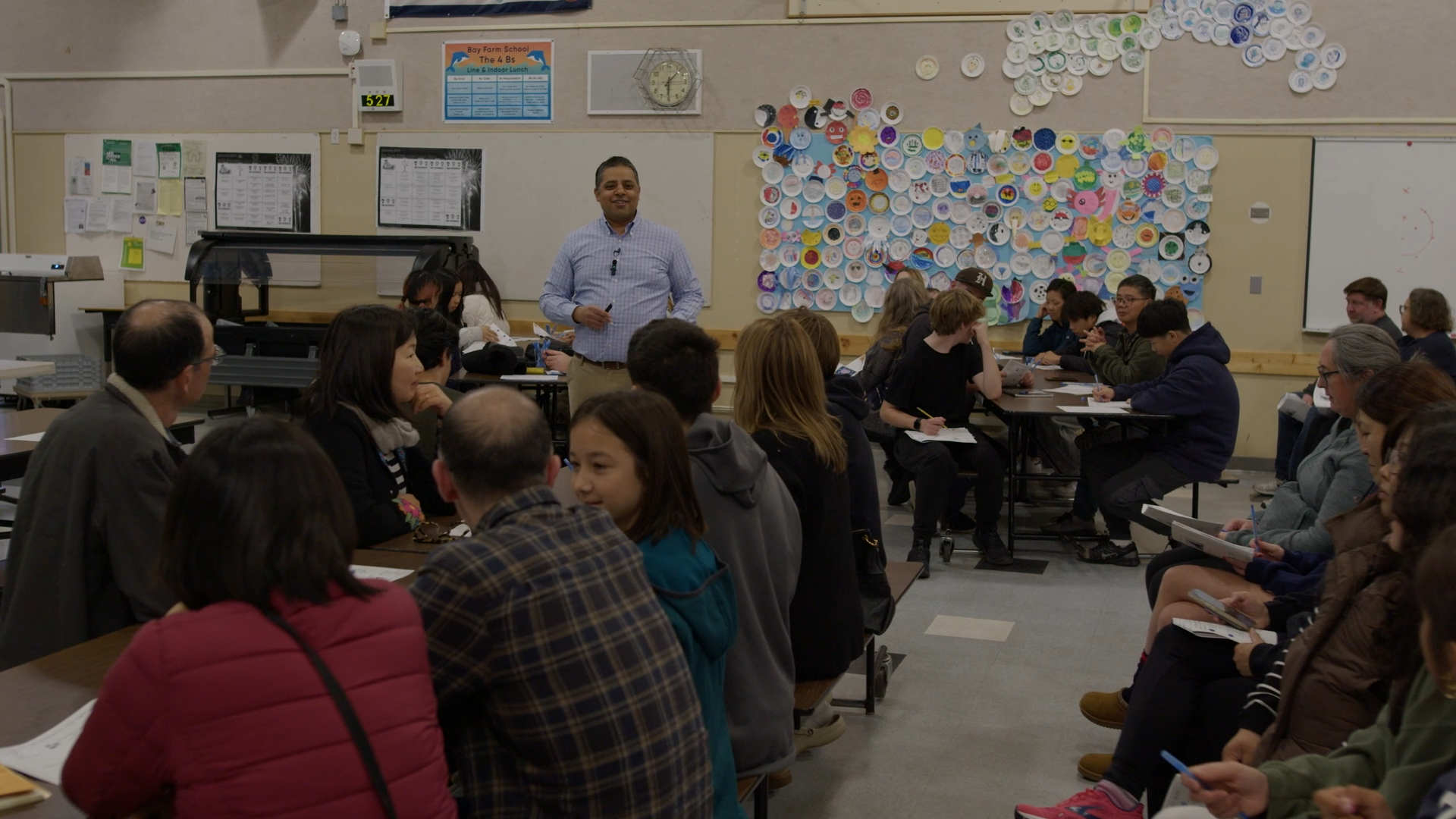
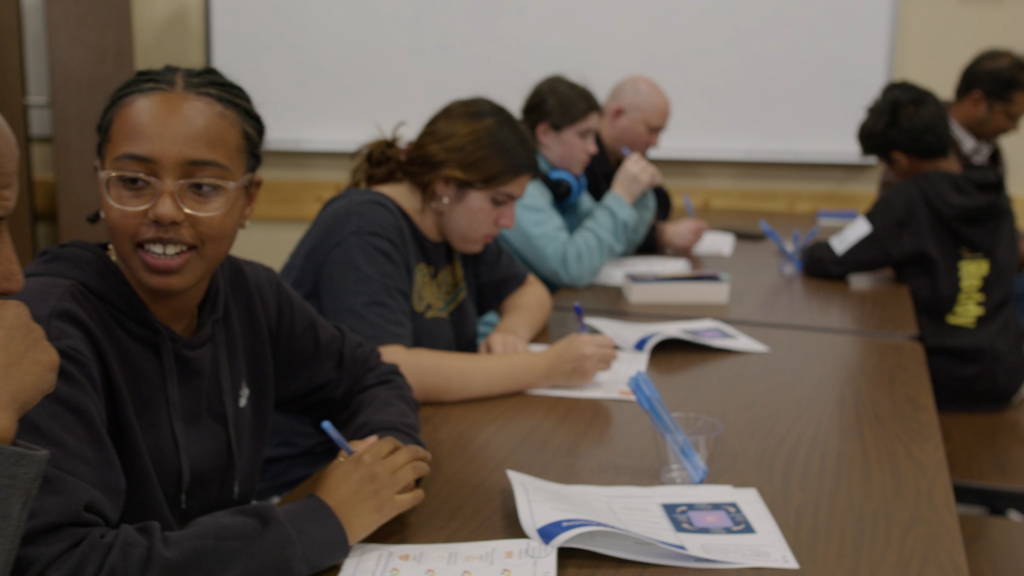
Designing High School workshop, Bay Area
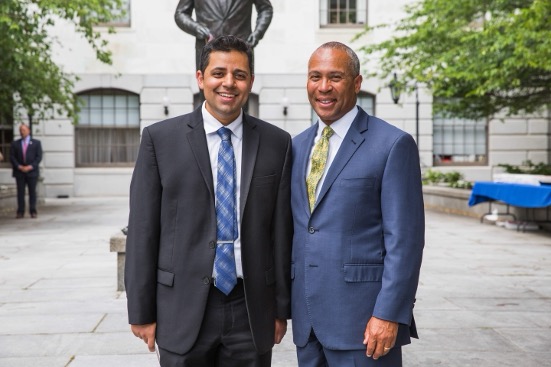
With Governor Deval Patrick -- Dukakis Fellows Program, Harvard Kennedy School
Neil Dandavati
Founder & Lead Instructor · Digital Curriculum Designer · Former SFUSD Teacher
Before building Master Plan Academy, Neil spent years teaching life design in San Francisco public high schools, developing and pressure-testing the methodology that sits at the core of this program. Teenagers who know what they're building — and learn to design, experiment, and adjust their path — write better essays, earn more interesting opportunities, and show up differently in every room that matters.
What worked in the classroom has since been rebuilt for 2026 — updated with AI tools, real execution systems, and the latest research on what actually drives self-motivated, resilient teens. The result is the Student OS: a personal system students build over six weeks and use for life.
- Harvard Kennedy School, Master of Public Policy
- UC Berkeley, BA Economics & Political Science
- Former life design teacher, San Francisco USD -- Burton High School
- Symantec Award for Innovation in Education
- Cornerstone Research · Kaiser Permanente Strategy · Dukakis Governor's Fellows Program
- Admitted as an applicant to U. Penn, UCLA (Regent's Scholar), and the full UC system · Graduate: Harvard Kennedy School, University of Chicago (full scholarship), UC Berkeley (Dean's Scholar), and the RAND doctoral program

senior year from scratch.
A teen who knows where they're headed -- and the execution skills to get there.
You've seen the program. Here's how to get your teen a seat.
All sessions, Student OS, Strategic 4-year plan, 1 year of learning portal access & 1:1 coaching session
+ Teen mindfulness curriculum included
- 9 Saturdays: 7 live Saturday sessions (75 min each) + 60-min orientation + cohort presentation session
- Weekly async learning modules on the MPA portal -- personal finance, career & major exploration, AI-enhanced research, social confidence
- Strategic multi-year college admissions, academic & activity plan -- built by your teen; with tools for tracking high school progresss, researching & tracking target colleges, and more
- Student OS Workbook -- weekly execution system built on frameworks used by peak performers, adapted for teens
- Complete 8-week teen mindfulness curriculum -- stress regulation, focus, and the inner practices of high-performers
- Personalized strengths, values & archetype profile and rich potential career dashboard
- A 45 min 1:1 coaching session -- parents welcome
- Personal strategy presentation to cohort -- Week 8
Designing High School gives your teen a college admissions strategy grounded in genuine career direction, a multi-year high school plan built around who they are, and the execution skills to run both. For students who want an additional layer of personalized support -- dedicated 1:1 time to go deeper on their strategy, refine their plan, and get hands-on guidance and partnership through the work -- these coaching packages are designed for exactly that.
Two focused sessions scheduled at key moments in the program -- one mid-program check-in and one pre-presentation session. Extra depth on career direction, the Student OS, or strategy deck refinement.
Four sessions with flexible scheduling -- during the program, after it ends, or a combination of both. Ideal for going deeper on career research, college strategy, admissions narrative development, or keeping momentum going after the cohort wraps.
Seven sessions placed at the highest-leverage moments in the program arc -- after the self-knowledge foundation, mid-program direction check, career data review, strategy synthesis, and pre-presentation polish -- plus two post-program sessions to sustain momentum after the cohort ends.
These are the patterns we see most often in capable, motivated high schoolers who haven't had a dedicated space for this work yet.
Capable, motivated teens are often incredible executors. The homework gets done, the activities get attended, the deadlines get met. But in all the busyness, have they really had time to scope out what all these pieces are building toward? Not just the next step -- but the full arc?
When teens get strategic clarity on their path and purpose -- and the tools to act on it -- effort gets easier. They start finding flow in their work, discovering energy they didn't know they had, and uncovering talents that were always there but never had a direction to grow into.
It's normal -- and it happens to many of us. But for teens carrying a full academic load, extracurriculars, social life, and family expectations, burnout can sneak up faster and hit harder. The energy that made them capable starts to feel like a resource that's running out.
With the right tools -- a real planning system, stress regulation practices, and a weekly rhythm that actually works -- teens don't just recover their energy. More done. More breathing room. More fun.
California now requires personal finance education starting in 2027-28 -- which tells you how essential it is. But there's a difference between learning to budget and understanding how money, passion, talent, and market demand all connect to the life you're actually building. That intersection -- what the Japanese call Ikigai -- is where the most energizing and rewarding careers tend to live.
In Designing High School, teens tackle these connections directly -- graphing real salary data, modeling financial decisions, and mapping their own Ikigai. The result is more clarity, more confidence, and a real sense of what they're actually building toward.
Most capable teens don't need more pressure. They need a clearer picture, better tools, and a space that's genuinely theirs. -- That's exactly what this program is built to give them.
"Designing High School turns all three of these into building blocks -- in seven steps, with a structured methodology that has produced measurable outcomes."
Common questions
Everything you're wondering about.
Parents who are ready to apply can skip this section and book your free call. Parents who need more detail before committing will find it here.
My kid is busy. How much time does this take?
75 minutes on Saturday mornings (for 11th/12th graders; 9th/10th timing is TBD), plus 30 - 40 minutes of independent learning and application on our course portal between sessions. The program also includes one 30 minute 1:1 virtual coaching session that parents can join.
We designed the program to not only fit around sports, AP coursework, and existing commitments — but to enhance how teens go about selecting and taking part in them in the first place.
My kid doesn't think they need this. How do I get them interested?
Bring them to a free intro call. Students who "don't need it" are often the ones who get the most out of it — they just need to hear the framework directly rather than have it filtered through a parent. Most students who resist the idea before the call are enrolled by the end of it.
Is this therapy? A tutoring program?
Neither. Designing High School is a structured life design and executive function program. We are not addressing mental health conditions — that's the work of a licensed therapist. Instead, we draw on disciplines including design-thinking, life coaching, and personal finance and combine them with insights on teen success backed by research and the experience of a national teaching award winner. We are building self-knowledge, decision-making skills, and execution systems. Think of it as the operating system that makes everything else — including therapy, tutoring, and admissions coaching — work better.
How is this different from a leadership camp or a college prep program?
Leadership camps give you an experience. College prep programs give you a deliverable. The Designing High School program gives you a methodology — a repeatable system for making decisions about your own life that you own and use long after the six weeks are over.
The difference shows up in what your teen walks away with. After a leadership camp, they have memories and maybe a certificate. After college prep, they have a polished application. After Designing High School, they have a written personal strategy, a Student OS they built themselves, and a framework for every major decision they'll face in high school, college, and beyond.
This isn't a program about building character through challenge or checking boxes toward college. It's a structured methodology — the same kind of rigorous goal architecture used in high-performing organizations — applied to the question of how a teenager figures out who they are and what they're actually building toward.
What equipment and setup does my teen need to participate?
The Designing High School program is a live, interactive experience — students participate in group discussions, work in shared files, complete typed exercises, and engage in breakout conversations with classmates. Here's what your teen needs before the first session:
Device & Internet
- Desktop computer, laptop, or Chromebook — ideal
- OR iPad or tablet with a connected keyboard and mouse — minimum acceptable setup
- Reliable internet connection
- A phone is not sufficient for participation
Accounts & Software
- A Gmail address and active Google Suite access — Google Docs, Sheets, and Drive are core to the program's tools and deliverables, including the Student OS workbook. If your teen doesn't have a Gmail account, setting one up takes about five minutes.
AI Tools
- We recommend Claude Pro (~$20/month) for its strength in writing, reflection, and structured thinking tasks. Other platforms including ChatGPT are compatible. Free plans can work but paid plans offer meaningfully greater capacity for the learning and productivity work we do together.
- All AI use is governed by MPA's AI Integrity Usage Policy, which students review and agree to at enrollment — emphasizing responsible, source-supported, and academically honest use.
Space
- A dedicated space where your teen can speak freely, engage with the group, and give the session their full attention — not a shared common area or the backseat of a car.
What if my teen misses a session?
Every student receives a session recording and has access to session slides and tools. The cohort is small enough that nobody falls through the cracks. If your teen misses a session, Neil follows up directly to check in via email.
Will this help with college essays?
Most college essays are weak because they're written backwards — the student picks an activity, then invents a narrative around it. The Designing High School program flips that sequence entirely. Students start by mapping their genuine values, strengths, and sources of energy. They use that foundation to prototype activities, areas of study, and summer opportunities that actually fit who they are. Over six weeks, that process builds a strengths-based identity — a clear, honest picture of what lights them up and why — that compounds. Students who know what they're building toward naturally pursue more of it, which generates the kind of purposeful trajectory that produces genuinely compelling application narratives.
By the time your teen sits down to write their essays, they're not staring at a blank page wondering what to say. They're choosing which part of a real story to tell.
What does the 1:1 coaching session involve? Can parents join?
The 1:1 session is a 45-minute conversation between Neil and your teen, typically held in the final two weeks of the program. It focuses on your teen's personal strategy deck — reviewing the plan they've built, sharpening their goals, and identifying concrete next steps heading into the next semester. Parents are welcome to join for all or part of the session. Many families use it as a shared check-in where the teen presents what they've built — which tends to be one of the more meaningful conversations a family has about their teenager's future.
Can we book additional coaching sessions beyond the included session?
Yes. Families who want continued support after the program (or additional support during the program) can book individual coaching calls with Neil directly. Additional sessions are 45 minutes at $150 — available to current and alumni families. These work well as semester check-ins, decision-making sessions around course selection or summer planning, or simply a space for your teen to pressure-test what they're working on with someone outside the family.
What's your refund policy?
What's your refund policy? We offer a full refund within 5 days of enrollment, less a small processing fee. Details are provided at enrollment.